🇰🇷 Your Card Works Fine at Home. In Korea, I've Watched It Fail Over and Over. (2026)
A friend visiting from abroad tried to pay for a taxi last month with a card that works everywhere — Tokyo, London, New York, no problem. The driver's little terminal beeped, flashed red, and spat out nothing. We tried again. Same thing. I ended up covering it and getting paid back later over KakaoTalk, which is basically the unofficial backup payment system for every foreigner's first week here.
This happens so often to visiting friends that I've started warning people before they even land: your card almost certainly works in Korea, right up until the exact moment it doesn't, and there's rarely a pattern to when.
💳 It's Not Your Bank, It's 1988
Korea went all-in on credit cards around the Seoul Olympics, decades before most countries did. That head start became a trap: the whole payment system — card readers, approval networks, the works — got built around a domestic standard that never had to talk to the rest of the world. People who've lived here for years with a Korean-issued card barely notice. It's short-term visitors swiping foreign-issued cards who hit the wall, especially at small shops and at train and subway stations.
Industry people I've seen quoted on this are blunt about why nobody's in a rush to fix it: upgrading a card terminal costs money, foreign transactions settle slower and cost merchants more in fees, and most shops just don't see enough foreign-card traffic to justify the hassle. Locals don't notice because, for them, none of this is broken.
🚇 The Subway Will Not Negotiate
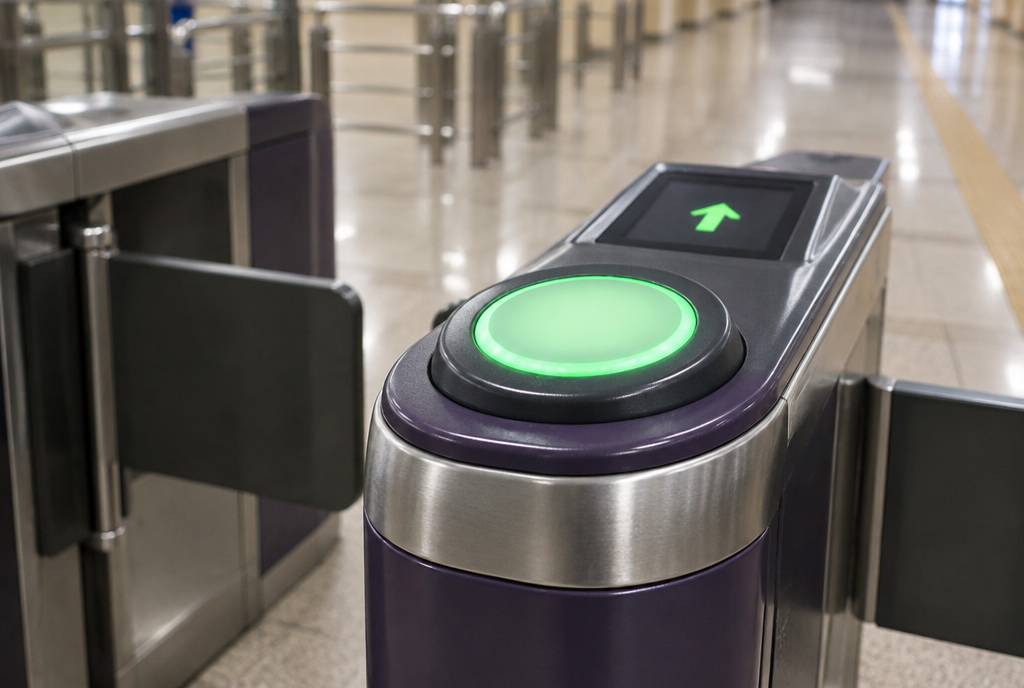
This is the one that catches people off guard, because it feels like it should just work. Seoul's subway gates run on a domestic contactless system that most international cards and phone wallets can't talk to. Visitors need an actual T-money card — 💰 ₩3,000 (~$2.15) for a plain one, closer to ₩5,000 (~$3.60) for a character design — and here's the part that trips people up: you can only load money onto it with cash. Not a foreign card, not a Korean one, at most convenience stores. Just bills, fed into a machine.
I once watched a sign above the KTX ticket kiosks at Seoul Station that read, bluntly, "Only Domestic Cards Are Accepted." Out of a whole row of machines, exactly two took foreign cards. One of those two was out of order that day.
💡 Pro tip: Buy a T-money card the moment you land — airport convenience stores and the transportation center both sell them — and keep a stash of ₩10,000 notes just for feeding the top-up machine. Think of it less like a transit card and more like a prepaid gift card that only accepts cash refills.
🚕 Kakao T Will Also Fight You
Kakao T is the taxi app everyone here uses, and it has its own special way of rejecting foreign cards: the app's auto-pay setup quietly assumes you have a Korean phone number for identity verification, and overseas banks will sometimes block the automatic charge on their end anyway because it looks like unusual activity. You'll see something like "Invalid card" or "Payment authentication failed" and no further explanation.
The workaround locals eventually tell every visiting friend: on the ride request screen, swipe past the default payment option until "Pay to Driver" shows up, book it that way, then just hand over cash or tap a T-money card when you arrive. If the app refuses to cooperate entirely, Kakao Mobility built a separate app called k.ride specifically for foreigners — no Korean number or Kakao account required — and Uber (branded as "UT" here) still works with whatever card you already have saved, though it may take longer to find you a car.
🏪 Street Food Stalls Run on a Different Rulebook
Small restaurants, street carts, and traditional market stalls are where card problems get weirdest, because the failures aren't consistent. Sometimes a reader just throws a generic communication error on a foreign card for no obvious reason, and the vendor shrugs like it's the most normal thing in the world — because to them, it is. A lot of smaller places quietly prefer cash anyway, since card fees eat into thin margins on a ₩4,000 item.
⚠ Note: This isn't about scams or anyone trying to avoid taxes — it's genuinely just older infrastructure meeting a card network it was never built to understand. Carrying some cash isn't a backup plan here, it's the plan.
📱 Why Apple Pay Still Feels Half-Finished Here
Visitors are often surprised that Apple Pay barely functions in Korea at all, while Samsung Pay is everywhere. The reason is almost funny once you know it: Samsung Pay's dominance here isn't built on the NFC tap-to-pay tech most of the world uses — it mimics the magnetic stripe swipe instead, so it works on ancient terminals that never got upgraded. Apple Pay only speaks NFC, so it simply can't talk to a huge share of Korean card machines. It's less "Apple dropped the ball" and more "the machines were never waiting for it."
🎁 Fun Fact
Korea is chasing 20 million annual tourists and is actively recruiting more skilled foreign workers to stay long-term — which is exactly why payment researchers keep saying this patchwork can't hold much longer. Change is apparently coming. It just hasn't landed yet, and I wouldn't plan a trip around it.
None of this means Korea is hard to visit — it just means the cash-and-card combo that works at home needs a small local upgrade: a T-money card loaded with cash, two different card networks in your wallet just in case one gets rejected, and the quiet acceptance that sometimes the simplest fix is just handing over paper money. Once you know the rules, it stops feeling like bad luck and starts feeling like just how things work here.
Illustration generated with AI.


Comments
Post a Comment