🇰🇷 I Thought I Was Being Quiet. My Downstairs Neighbor Disagreed. (2026)
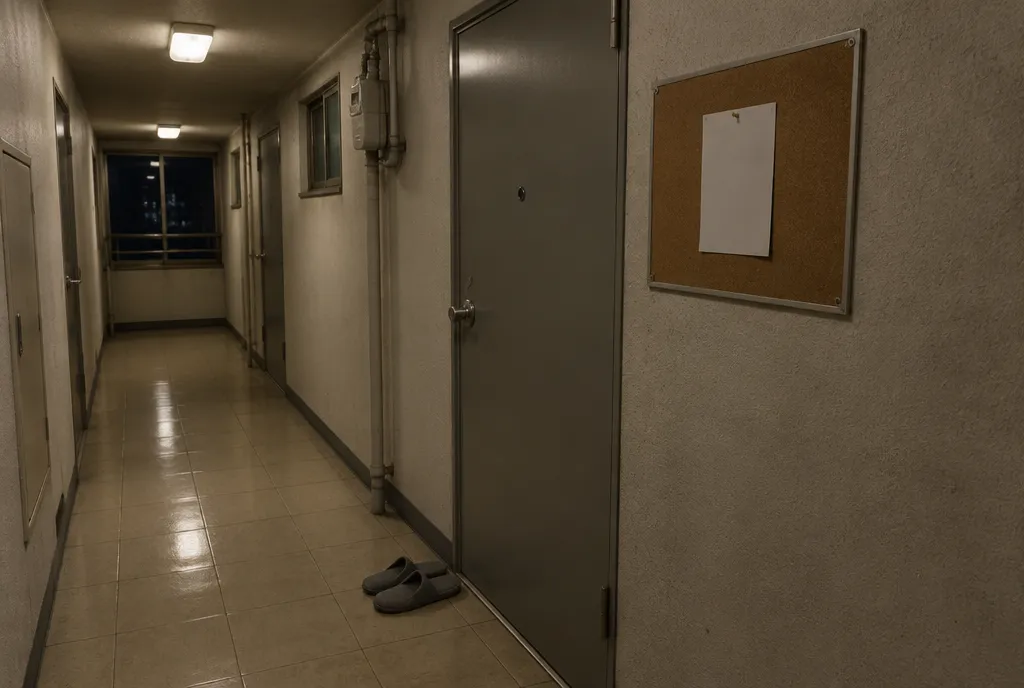
There was a sticky note on the community board by the elevator on my floor last month. No name on it, no apartment number — just a few lines about "late-night footsteps" and a request to "please be more careful after 10pm." I live alone. I don't own heels. I was, genuinely, confused about who it was even aimed at. That's when I learned that in Korea, this kind of note isn't really addressed to one person — it's addressed to the building.
If you've just moved into a Korean apartment and someone taped a passive-aggressive note to your door, or you've heard someone mention "층간소음" and wondered why it sounds like a legal term, this is the thing nobody explains to you before you sign a lease here.
📏 There's an Actual Decibel Number for This
Floor noise in Korea isn't a vague "be considerate" guideline — it's a government standard with real numbers attached. Direct-impact noise (footsteps, dragging furniture, kids running) is capped at 39 dB in the daytime (6am–10pm) and 34 dB at night, measured as a one-minute average, with peak limits of 57 dB and 52 dB. Airborne noise (TV, speakers, musical instruments) gets a looser 45 dB by day and 40 dB at night, averaged over five minutes.
To put that in perspective: a normal conversation runs around 60 dB, and a quiet library is roughly 30–40 dB. So the legal threshold for "acceptable" footstep noise at night is basically library-quiet. That's a much stricter bar than most Western apartment leases set, and it's the first thing that surprises people who assume their normal walking-around-the-house volume is fine.
💡 Pro tip: toilet flushing, water pipes, barking dogs, air conditioners, and renovation work are all specifically excluded from the standard — so if a neighbor complains about those, they're venting, not citing a rule that actually exists.
☎️ There's a Free Hotline Just for This
The government runs a dedicated line for exactly this problem: the Floor Noise Neighbor Center (층간소음 이웃사이센터), operated by the Korea Environment Corporation. It's free, reachable on weekdays, and the number is 1661-2642. Between 2023 and 2025 it logged roughly 102,000 complaints nationwide — which tells you this isn't a niche annoyance, it's a near-universal apartment-living experience here.
Starting this year, the hotline's coverage was extended to officetels and studio units too, not just standard apartment blocks — a sign of how much this issue has spread as more people live in smaller, closer-together units.
The center doesn't show up and fine anyone on day one. It counsels both sides over the phone first, and only sends staff out to physically measure decibels in a small fraction of cases — and most of those measured cases don't actually exceed the legal limit. In other words, most floor-noise conflicts get resolved (or at least cooled down) before anyone brings out equipment.
⚖️ When It Doesn't Get Resolved, Here's What It Costs
If mediation fails, there's an actual escalation path with real money attached, and the numbers vary a lot depending on how far it goes:
- Standard petty-offense fines for ordinary noise complaints top out around 💰 ₩100,000 (~$75) — small, mostly symbolic.
- Going through the Environmental Dispute Adjustment Committee typically results in compensation in the 💰 ₩500,000–₩1,000,000 (~$374–$747) range per case.
- A Seoul Southern District Court ruling from late 2025 ordered an upstairs resident to pay four downstairs neighbors 💰 ₩3,000,000 (~$2,242) each — 💰 ₩12,000,000 (~$8,969) total — after two days of measurements showed impact noise well past the legal "tolerance limit."
- Deliberate retaliation — the infamous move where someone installs a speaker against the ceiling and blasts noise back upward — has drawn fines as high as 💰 ₩7,000,000 (~$5,232) in a 2026 case.
⚠ Note: none of this means every loud footstep ends in a lawsuit. Court cases are the extreme outcome after everything else has already failed, usually over months of documented, repeated noise — not a one-off bad night.
📈 Why This Keeps Growing
Nationwide floor-noise complaints went from 10,624 cases in 2012 to 40,060 in 2024 — a 277% increase over twelve years, and they spiked above 50,000 a year during the pandemic lockdowns when everyone was suddenly home all day. More people, smaller units, thinner budgets for soundproofing in older buildings, and a lot more time spent indoors all point the same direction.
🎁 Fun fact: buildings constructed after 2005 — and especially after a 2023 regulatory tightening — generally have noticeably better slab insulation than older ones. If you're apartment-hunting and this matters to you, the construction year on the listing is doing more work than it looks like.
🧦 What Locals Actually Do About It
Nobody I know confronts a neighbor face-to-face first — that's treated as the move most likely to turn a noise problem into a feud. The actual order people go through:
- Thick rubber or felt mats under furniture legs and in high-traffic rooms — a basic set runs around 💰 ₩30,000–₩50,000 (~$22–$37).
- Indoor slippers, worn consistently, which sounds small but noticeably cuts down impact noise — felt pads for chair legs alone are often just 💰 ₩5,000 (~$3.74).
- If it's still a problem: go to the building's management office first, not the neighbor's door.
- Keep a written log — dates, times, what kind of sound — before calling anyone official.
- Only then call the 1661-2642 hotline, and treat the dispute committee and courts as the last resort, not the first move.
A decibel-measuring phone app is also a common first step before any of this, mostly so you have something concrete to describe if it does escalate.
None of this is really about who's "right." It's a structural reality of stacking a lot of people vertically in buildings with floors that transmit sound more than most newcomers expect, and the system — hotline, mediation, courts — exists because the problem is common enough to need one. If you're renting here, it's worth checking a building's age and slab quality the same way you'd check the kitchen before signing anything, and it goes both ways — the same instinct that gets your trash sorted correctly applies to how you move around your own living room after 10pm. It's a small adjustment, and after a while you stop thinking about it at all.
Illustration generated with AI.


Comments
Post a Comment