🇰🇷 I Said 'Just Natural Lashes, Please.' The Technician Needed Five More Questions to Even Start. (2026)
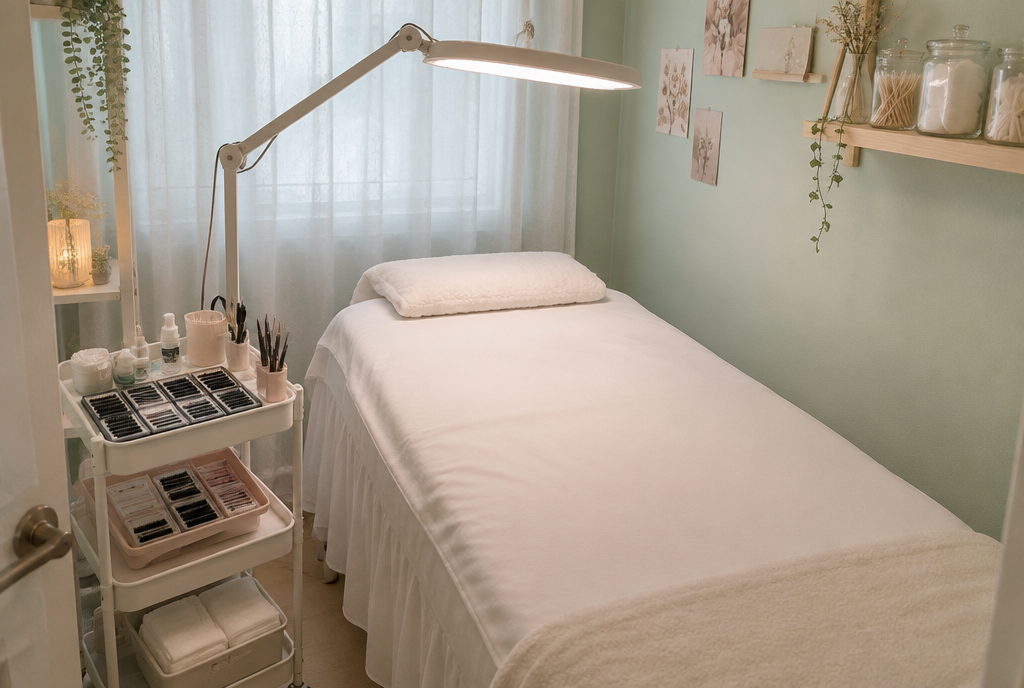
Typing "eyelash extensions Seoul" into a search bar mostly gets you before-and-after photos and a price screenshot from someone's receipt, with zero explanation of what actually happens once you're in the chair. The appointment itself turns out to involve more decision-making than anyone warns you about — I said "just natural, please" and the technician still needed five more answers before picking up a single lash.
If you're planning to get this done while you're here, or you just want to understand why half the salons downtown have a glass case of tiny labeled trays by the door, here's what that conversation actually covers.
💬 "Natural" isn't a size. Here's what they're actually asking.
The first fork in the road is classic vs. volume. Classic (sometimes labeled 1D) means one extension glued to one natural lash — more length and definition, not more density. It's the closest to "I just want my own lashes but better."
Volume (2D–4D) is a handmade fan of several ultra-fine fibers attached to a single natural lash, which is how you get noticeably fuller lashes without the extra weight of just using thicker single strands. Russian volume (5D and up) pushes that further — it's dramatic and dark, and technicians will usually talk you out of it if your natural lashes are fine or sparse, since there's not enough real lash underneath to anchor that much fiber.
Then come the follow-up questions: curl type (C curl for a natural lift, D curl for a more dramatic curve), length, and thickness in millimeters. None of this is upselling — it's the actual spec sheet, and walking in with at least a rough answer for "classic or volume" saves real time.
💰 What it costs, by set type
Prices track almost exactly with how much hand-work goes into each lash.
- Classic sets: 💰 ₩30,000–₩55,000 (~$22–$41), usually 60–90 minutes
- Volume sets (2D–4D): 💰 ₩50,000–₩90,000 (~$37–$67), 90–120 minutes
- Russian volume (5D+): 💰 ₩70,000–₩130,000 (~$52–$97), 2–2.5 hours
- Refills within ~3 weeks: roughly half the full-set price, around 💰 ₩25,000–₩55,000
The spread inside each category is wide because Seoul has an enormous number of small, owner-operated one- or two-chair studios competing on price — the same density that keeps nail and hair prices all over the map in this city.
⏳ The three-week rule nobody mentions upfront
Extensions don't fall out on their own — they shed along with the natural lash they're glued to, and natural lashes cycle out every few weeks whether you have extensions or not. A full set generally looks good for three to four weeks before enough natural lashes have shed that the remaining extensions start looking sparse.
⚠ Note: book the refill around week three, not week four or five. Wait too long and there usually isn't enough left to "fill in" — you end up paying for something closer to a full new set anyway, just with extra removal time added on.
📅 How this actually gets booked
Walk-ins exist but are unreliable, especially at smaller studios where one technician might be solo-booked for the next three hours. The two realistic paths: Naver Map, searching "속눈썹 연장" (songnunsseop yeonjang) by neighborhood to see reviews and photos, or Instagram DM, which a huge share of one-room studios use as their entire booking system — the same pattern you'll see with nail studios and semi-permanent eyebrow work here.
💡 Pro tip: if you're messaging a studio cold, say the set type, curl, and rough length you want in the first message. A studio that gets "volume, D curl, 9-10mm, reference photo attached" back-to-back books you in thirty seconds. A studio that gets "hi do u do lashes" starts a slow back-and-forth that can eat up a day before you land a slot.
⚠ A note on the stuff near your eyes
This is a cosmetic service, not a medical one, so there's no need for the cautious tone that applies to anything injectable — but it's still adhesive and fiber sitting millimeters from your eyeball for weeks at a time. If you've never had any eye-area sensitivity or lash-glue reactions before, most studios will do a quick patch test strip on a couple of lashes and have you wait a few minutes before committing to a full set. Worth asking for if it isn't offered.
🎁 Fun fact: a lot of the ultra-fine synthetic fiber used for volume fans worldwide is manufactured in Korea — part of why the "Korean volume" technique became the default term in lash studios well outside Korea too.
Four weeks later, mine have shed down to barely-there and I've already rebooked. Worth knowing the vocabulary before you sit down — the chair goes a lot faster once you do.
Illustration generated with AI.


Comments
Post a Comment