🇰🇷 I Got My Eyebrows Tattooed On in Seoul. The Person Who Did It Might Not Legally Be Allowed To. (2026)
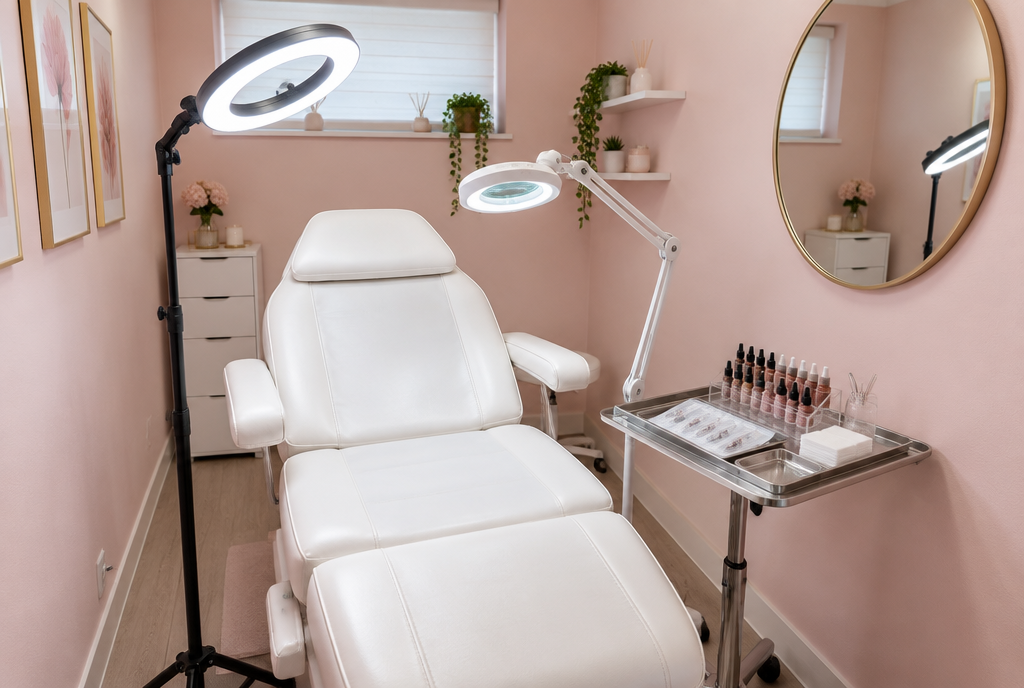
A friend visiting last month kept asking where I got my eyebrows done, because from two feet away they genuinely look tattooed on — no pencil, no powder, no gel, they're just there, every morning, even at 6 a.m. before coffee. I gave her the name of the little studio near my apartment, the one I found through an Instagram post, the one where the appointment came through KakaoTalk and the receipt was a folded cash envelope. What I didn't mention, because I didn't know it myself until I went looking afterward, is that the person who did my eyebrows almost certainly isn't legally allowed to.
That's not a scare story. It's just a detail that never comes up when you're booking through a reel of before-and-after photos, and it's worth knowing before you sit in that chair.
💉 What "Semi-Permanent" Actually Means
The Korean term is 반영구 눈썹문신 (banyeonggu nunsseop munsin — "semi-permanent eyebrow tattoo"), and it's exactly what it sounds like: a fine needle deposits pigment just under the top layer of skin, shallower than a regular body tattoo, which is why it fades instead of staying forever. Studios generally offer it in three styles: a natural hair-stroke technique that mimics individual brow hairs, a soft shadow/ombré fill that looks more like powder makeup, and a combo of both.
The hair-stroke version tends to fade in 1–2 years; the shadow and combo styles, because more pigment sits in the skin, can last 2–3 years depending on your skin type and how often you exfoliate that area. None of it is truly "permanent" — that's the whole selling point.
⚖️ The Legal Gray Zone Nobody Mentions
Here's the part that surprised me. Under Korean medical law, tattooing — including eyebrow embroidery — is technically classified as a medical act that only a licensed doctor may perform. In practice, the overwhelming majority of semi-permanent eyebrow work in Korea is done at small independent 반영구화장샵 (semi-permanent makeup studios) by artists who are not doctors, which puts nearly the entire industry in a long-standing legal gray zone.
It's genuinely contested, not just a technicality nobody enforces: courts have gone both directions on it, including at least one appeals case where a semi-permanent makeup artist was acquitted on the reasoning that eyebrow tattooing isn't a medical act. There's an ongoing push for a separate "tattooist license" law that would formally legalize and regulate non-medical tattoo artists, brows included, but as of now it hasn't fully resolved the ambiguity.
⚠ Note: This is a needle procedure that breaks the skin, and if something goes wrong at an unlicensed studio, your legal recourse is murkier than it would be at an actual clinic. A dermatology clinic will cost more and take a slightly more clinical approach, but it removes that ambiguity entirely — worth knowing so it's a choice you're making on purpose, not one you stumbled into.
💰 What It Actually Costs
Prices swing hard depending on neighborhood and technique, which is honestly the biggest variable tourists don't expect:
- Neighborhood studios outside the trendy districts: 💰 ₩80,000–150,000 (~$58–$109) for one session, sometimes bundled with a follow-up.
- Mid-range studios, most areas: 💰 ₩150,000–250,000 (~$109–$181) covering the initial session plus one touch-up.
- Premium studios in Gangnam and Apgujeong: 💰 ₩300,000–700,000 (~$217–$507) — the same procedure, priced for the neighborhood and the artist's Instagram following.
The first touch-up, usually scheduled 4–8 weeks later to fill in spots where pigment didn't take evenly, is often included in the original price. After that, follow-up touch-ups run another 💰 ₩50,000–150,000 (~$36–$109) each, and most people need one every year or two to keep the shape crisp. Do the three-year math before you commit to a "cheap" option — a budget studio plus extra maintenance visits can land close to what a premium studio charges upfront.
🎁 Fun fact: Technique is priced in a rough hierarchy — the hair-stroke style is usually the cheapest, the shadow/ombré fill costs more, and the combo of both sits at the top, roughly the same logic as ordering a plain coffee versus one with three add-ons.
📱 How Booking Actually Works
Like the nail studios I've written about before, most semi-permanent brow studios in Korea don't run on walk-ins or phone calls. You find an artist through their Instagram portfolio, DM them (or message through KakaoTalk) with reference photos of the shape you want, and they send back available time slots. Deposits are common, and showing up late or unannounced can mean losing your slot entirely — there usually isn't a front desk to smooth things over.
💡 Pro tip: Screenshot two or three reference photos from the artist's own portfolio, not random photos from the internet — it tells them you've actually looked at their work and helps set realistic expectations for your face shape.
🧠 What To Actually Ask Before You Book
A few questions are worth asking before you hand over a deposit, whether the studio is a dermatology clinic or an independent artist: whether needles and cartridges are single-use and opened in front of you, how the touch-up policy works and what it costs, and how healed results (not just fresh, swollen photos) look on past clients. A studio that hesitates on any of these is one to skip.
If you'd rather sidestep the legal ambiguity altogether, a growing number of dermatology and plastic surgery clinics — especially in Apgujeong and Gangnam — now offer the same procedure performed or supervised by a licensed doctor, usually at the higher end of the price range above.
My eyebrows, for the record, have held up for over a year and I have zero regrets. I just wish someone had mentioned the legal fine print before I booked through an Instagram reel — now you know before you do.
Enjoy!
Illustration generated with AI.


Comments
Post a Comment