🇰🇷 Gangneung Gets 4 Million Visitors a Year. Less Than 1 in 10 Is a Tourist From Abroad. (2026)
A friend visiting from abroad once asked me, halfway through planning a Korea trip, whether Gangneung was "worth the detour." I had to stop and think about how to answer, because I used to live there, and to me it was never a detour. It was just where I lived, two hours from the place everyone else was flying into.
That question stuck with me, so I looked up the actual numbers this year, and they explain a lot about why so few visitors from outside Korea ever end up on that train.
🚄 4 Million Visitors a Year, and Almost None of Them Foreign
Gangneung is aiming for 4,000,000 domestic visitors in 2026, and about 400,000 from abroad. Last year the actual count was roughly 3,436,000 domestic and 330,000 foreign, so the ratio hasn't moved much: foreign visitors make up under one in ten people walking around the city on any given day.
The city government has actually named 2026 and 2027 the "Gangneung Visit Years," with an explicit goal of pushing those foreign numbers toward 500,000 by 2027. It's a city actively trying to get discovered by people outside the country, which is a strange position to be in for somewhere this easy to reach.
💡 Pro tip: If a Korean coworker says they're "going down to Gangneung" for the weekend, they mean it the way someone in London might say they're going to the seaside for two days. It's a normal, unremarkable weekend trip, not an expedition.
🎫 The Part That Actually Surprises People: How Easy It Is
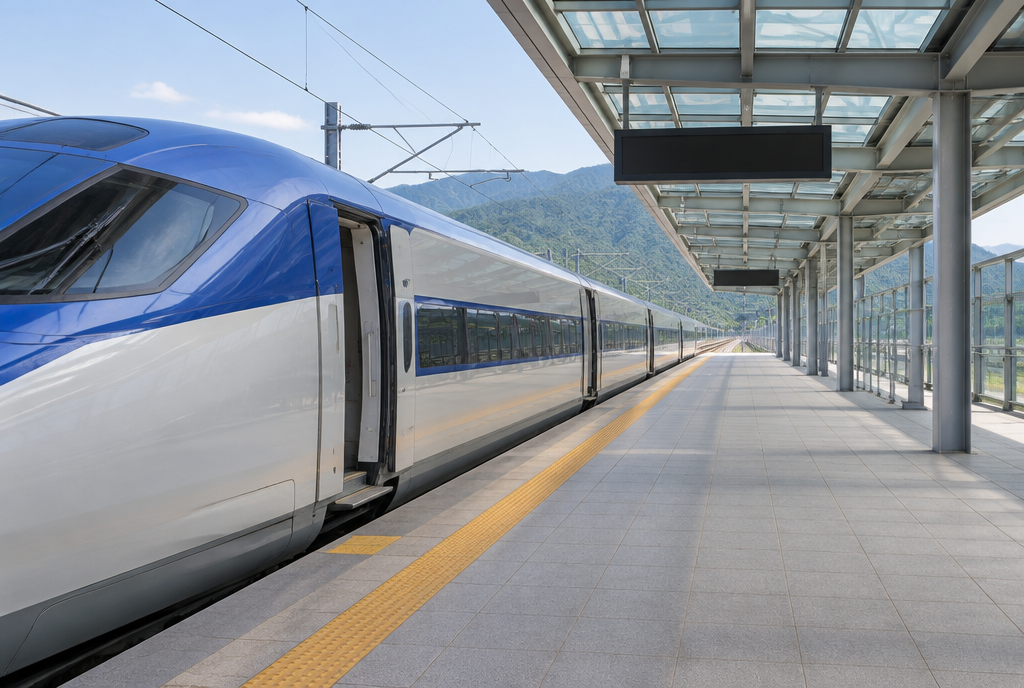
Here's what I mean by easy. The KTX from Seoul Station or Cheongnyangni takes about 1 hour 30 minutes to 1 hour 50 minutes, and a one-way ticket runs 💰 ₩27,600 (~$20). There are more than a dozen departures a day, so on most weekdays you can just show up, buy a ticket, and be on a train within the hour.
Since the line opened for the 2018 Winter Olympics, it and its extension toward Donghae have carried a combined total of over 40 million passenger trips. For comparison, that's roughly Canada's entire population worth of people passing through platforms that most visitors to Korea never once walk onto.
⚠ Note: Summer weekends and public holidays sell out fast, sometimes weeks ahead. If you're set on a specific date in July or August, book your return leg the same day you book the outbound trip — don't assume you'll sort it out later.
☕ What People Picture vs. What's Actually There
If Gangneung shows up on a foreigner's radar at all, it's usually as "the coffee street," meaning Anmok Beach and the row of cafés along it. That part is real and it's genuinely nice. But it's also about four blocks of a city that has an entire fishing port, a university, a downtown market, and neighborhoods where absolutely nobody is thinking about coffee.
When I lived there, the actual rhythm of the place had almost nothing to do with the café strip. It was more like: check the surf report, walk the sea wall path when the wind died down, and figure out what was fresh at the fish market that morning. The coffee street is real, but treating it as the whole city is a bit like judging all of Los Angeles by one pier.
🌊 Why a Week-Long Korea Trip Skips It Anyway
Even people who've heard of Gangneung often cut it from the itinerary, and the math makes sense: a round trip eats close to four hours of travel time out of a week that's already packed with Seoul, maybe Busan, maybe a DMZ tour. Squeezing in a coastal city that "is just beaches and coffee" doesn't always survive the priority list.
The thing is, it works fine as a single overnight rather than a full detour. Go down on a morning train, walk the coast, eat where the fish market people eat (not the tourist-facing seafood row), and catch sunrise at Jeongdongjin the next morning before heading back. That's a complete, satisfying trip that costs you one night, not three days.
🎁 Fun fact: Jeongdongjin, just outside Gangneung, has one of the country's most famous sunrise-viewing beaches specifically because it's one of the closest points to the sea from Seoul by train — it became a cultural shorthand for "watching the first sunrise of the year" long before it was ever marketed to outsiders.
🧭 If You're Actually Going
- Book the train, not a bus. The express bus is cheaper but takes closer to 2.5–3 hours depending on traffic. The KTX is worth the extra won.
- Go on a weekday if you can. Trains, cafés, and the beach itself are a completely different experience without a weekend crowd from Seoul competing for the same tables.
- Don't skip the fish market for the postcard seafood street. Prices and freshness both tend to be better a few streets back from the water.
- Pack for wind, not just sun. The coast can be sharp even when it looks calm on a weather app.
It's not a hidden city — several million people already know exactly what they're getting when they book that train. It's just that almost none of them, so far, are visiting from outside the country. That's changing a little every year, and honestly, having lived there, I don't mind being early to recommend it.
For the food side of this same city, here's what locals actually eat two blocks from the coffee street. And if you want the wider picture of why leaving Seoul at all is worth it, this is where that series started.
Enjoy!
Illustration generated with AI.


Comments
Post a Comment