🇰🇷 8 Korean Foods Locals Order Without Blinking — And Tourists Almost Never Try (2026)
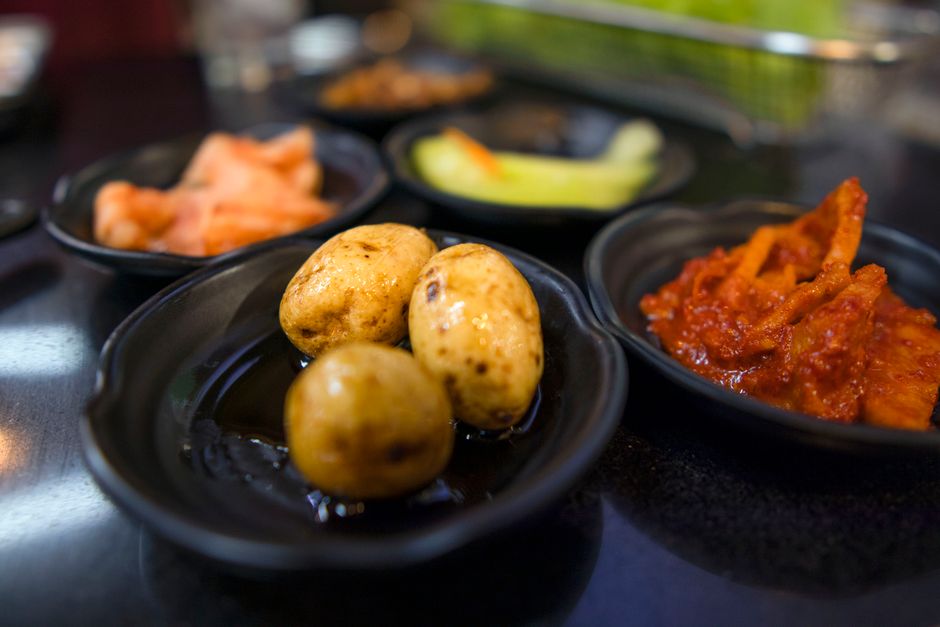
Every time a friend visits from another country, there's a moment — usually around day three — where they finally stop pointing at the menu photo and just say "order whatever you're having." That's the moment I stop steering them toward bulgogi and bibimbap and actually order what I eat on a random Tuesday. Half of what shows up next, they've never even heard of, and most of it never makes it onto a "must-try Korean food" list written by someone who visited for four days.
These aren't secret dishes. Every one of them is sold on a normal street, in a normal neighborhood restaurant, at a price a student can afford. Locals order them without a second thought. Tourists — even ones who've done their homework on K-BBQ and tteokbokki — almost always skip them, usually because nobody ever explained what they actually are before the plate arrived.
🩸 Sundae (순대) — Korean Blood Sausage
Sundae is pig or cow intestine stuffed with a mix of glass noodles, barley, and pig's blood, then steamed and sliced into rounds. It sits in almost every market food stall and pojangmacha (street tent bar) in the country, usually next to a pile of tteokbokki, and locals eat it dipped in salt or a bit of the spicy tteokbokki sauce.
💰 A plate typically runs ₩5,000–8,000 (~$3.65–5.80), and most stalls will add a side of liver and lung for a few thousand won more if you ask.
💡 Pro tip: If the word "blood sausage" makes you hesitate, know that the flavor reads closer to a savory, slightly chewy rice cake than anything metallic — the intimidating part is entirely the name, not the taste.
🐷 Jokbal (족발) — Braised Pig's Trotters
Whole pig's feet, slow-braised for hours in soy sauce, ginger, and garlic until the skin turns glossy and the meat pulls apart, then sliced thin and served cold or warm with a shrimp-and-garlic dipping sauce. It's a late-night dish — the kind of thing a group orders around 10pm with beer or soju, not a lunch item.
💰 A small order for one or two people is around ₩23,000–28,000 (~$16.80–20.40); a large order for a full table runs ₩35,000–45,000 (~$25.50–32.80).
⚠ Note: Texture, not flavor, is what trips people up — there's collagen-heavy skin and cartilage in the mix. If that's not your thing, ask for "sal-only" (살코기 위주로), which gets you more lean meat and less skin.
🍗 Dakbal (닭발) — Spicy Grilled Chicken Feet
Boneless or bone-in chicken feet, marinated in a gochujang-based sauce hot enough to make regulars sweat, then grilled or stir-fried until the skin turns slightly caramelized at the edges. It's a classic anju (drinking food) — I've never once seen someone order it without also ordering beer.
💰 Expect ₩15,000–20,000 (~$10.95–14.60) for a plate that comfortably feeds two or three people as a shared side.
🎁 Fun fact: Dakbal restaurants often rate their spice on a numbered scale rather than just "mild/medium/hot" — if you see a menu with spice levels 1 through 5 or higher, level 1 is already spicier than most Western "hot" sauces.
🔥 Gopchang / Makchang (곱창/막창) — Grilled Beef or Pork Intestine
Small intestine (gopchang) or the thicker abomasum cut (makchang), grilled tableside over charcoal until the outside crisps and the inside stays juicy and slightly fatty. Whole streets in cities like Daegu are built around this single dish — I wrote a full breakdown of Daegu's gopchang alley if you want the deep-dive version — but you'll find a solid version in almost any neighborhood with a cluster of drinking spots.
💰 A standard 300g order runs ₩17,000–22,000 (~$12.40–16.05), usually grilled at your table by staff for the first round so you don't overcook it.
💡 Pro tip: Order it with a side of doenjang (fermented soybean paste) for dipping and a bowl of bokkeumbap (fried rice) to finish — locals almost always end a gopchang meal by frying rice in the leftover drippings in the same pan.
🐟 Agujjim (아귀찜) — Spicy Braised Monkfish
Monkfish — an ugly fish that gets a much better deal once it's braised — stewed with bean sprouts, in a thick, fiery red sauce built on gochugaru and garlic. The texture is firm and almost meaty rather than flaky, which surprises people expecting a delicate white fish dish.
💰 A small size that covers two people starts around ₩33,000–38,000 (~$24–27.70), with large sizes for bigger groups running ₩50,000+ (~$36.50+).
⚠ Note: This is one of the spicier stews on this list even by Korean standards — if you're spice-sensitive, ask the restaurant to make it "deol maepge" (less spicy) before it's cooked, not after it arrives.
🍲 Gamjatang (감자탕) — Pork Spine and Potato Stew
A deep red, bone-in pork spine stew simmered for hours with perilla seeds, napa cabbage, and potatoes, until the meat is falling-off-the-bone tender. It's a hangover food as much as a dinner — you'll see it packed at lunch the day after a big Friday night out.
💰 A pot for two runs about ₩35,000–42,000 (~$25.50–30.60), or ₩10,000–13,000 (~$7.30–9.50) for a single-serving bowl at smaller spots.
🎁 Fun fact: The name literally translates to "potato stew," which confuses first-timers expecting something potato-forward — the potato is a supporting player, not the point. The pork spine is the actual star.
🥶 Kongguksu (콩국수) — Cold Soybean Noodle Soup
The gentlest dish on this list, and proof that "food locals eat that tourists skip" doesn't always mean intimidating. Wheat noodles sit in a thick, ice-cold, unsweetened soybean broth, usually with a few ice cubes still floating in the bowl and a sprinkle of salt or sugar added at the table to taste. It's a specifically summer dish — most restaurants only put it on the menu from around May through September.
💰 A bowl runs ₩9,000–13,000 (~$6.55–9.50) at most noodle shops.
💡 Pro tip: The broth is nutty and almost milk-like rather than sweet — if you're expecting a sweet soy milk drink, add the salt packet on the table before your first bite, not the sugar one. Locals are split roughly down the middle on salt versus sugar, and restaurants leave both on the table for exactly that reason.
🥩 Yukhoe (육회) — Korean Raw Beef Tartare
Julienned raw beef tossed in sesame oil, soy sauce, sugar, and garlic, topped with a raw egg yolk and often served alongside julienned Korean pear for a sweet, crisp contrast. It's the dish most likely to get a "wait, raw?" reaction from a first-timer, even though it's been a standard order at traditional markets and butcher-restaurants for generations.
💰 A plate at a proper butcher-restaurant runs ₩22,000–28,000 (~$16–20.40); market versions can be a bit cheaper.
⚠ Note: Stick to restaurants that specialize in raw beef or double as a butcher shop (they turn over meat fast and handle it accordingly) rather than ordering yukhoe as an afterthought at a random general restaurant.
🍽️ Why This List Even Exists
None of these dishes are hidden. They're not speakeasy-style secret menus or things you need a local's phone number to access — they're on regular menus, in regular neighborhoods, at prices regular people pay every day. The only real barrier is that nobody translated the name into something that sounds appetizing before it landed on the table in front of you, and it's a lot easier to just point at the bulgogi photo instead.
If regional food is more your speed, I've gone deep on what locals actually order in Gwangju, Busan, Jeonju, Tongyeong, and Gangneung. Next time a friend finally tells me to just order for them, I'm already planning which one of these lands first.
Photo by Wilson Ren on Pexels.


Comments
Post a Comment