🇰🇷 I Asked Where Daegu Actually Eats. The Answer Was an Alley, Not a Restaurant. (2026)
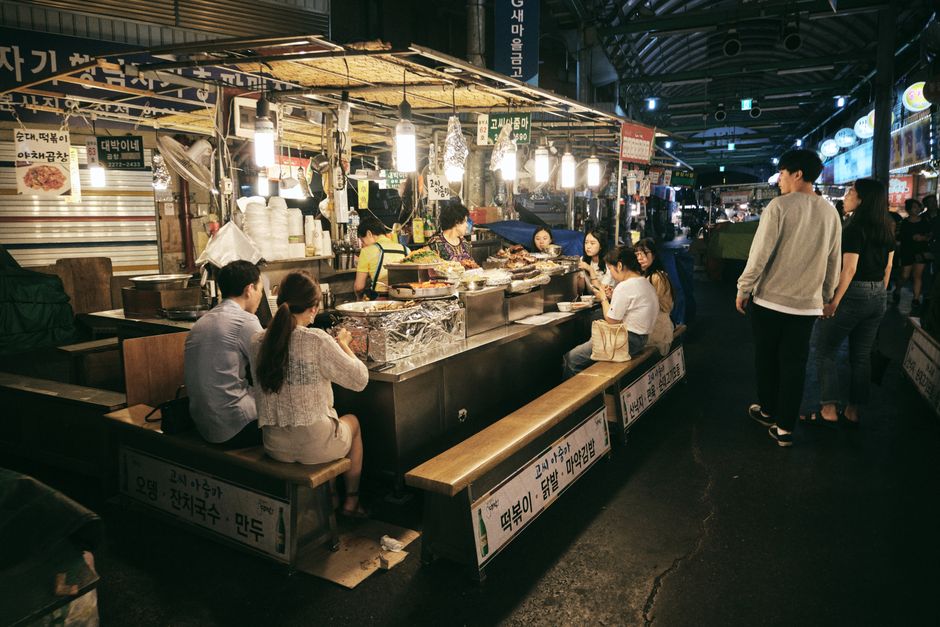
Type "best restaurants in Daegu" into Google and you'll get a wall of Tripadvisor lists with the same five franchise-looking places on repeat. That's not what happened when I actually asked someone who lives there where to eat. The answer wasn't a restaurant name. It was an alley.
Daegu doesn't really do standalone "best restaurant in town" the way tourist guides frame it. It does streets — entire blocks where every single storefront sells one dish, and you just pick whichever one has the most locals waiting outside. Here's what's actually on those streets, and why they're worth the detour from Seoul.
🔥 Anjirang Gopchang Street — Where Makchang Is a Whole Neighborhood
Near Exit 2 of Anjirang Station, there's a stretch where practically every restaurant grills the same thing: makchang (막창), the thick part of beef or pork intestine. It's grilled tableside over charcoal until the outside turns crispy and the inside stays juicy, and the whole street smells like smoke and garlic by early evening.
A standard 300g order runs about 💰 ₩18,000 (~$13.05). Most places don't really get going until after 7pm — locals treat this as a dinner-and-drinks thing, not a lunch stop, so an empty restaurant at 5pm doesn't mean it's bad, it just means you're early.
💡 Pro tip: Makchang is organ meat, and the texture (chewy, slightly fatty) surprises a lot of first-timers. If you're unsure, order a small portion first instead of committing to a full round for the table.
🍲 Dongin-dong Jjimgalbi Alley — Braised Ribs That Arrive Still Bubbling
A few subway stops away, Dongin-dong has its own dedicated restaurant row, this time for jjimgalbi (찜갈비) — beef short ribs braised in a thick red pepper and garlic sauce, served bubbling in a battered aluminum pot that looks like it's been used for decades (because it probably has). The garlic hits first, then the chili, and it's built to be shared over rice.
Depending on the cut and how much beef is in the order, expect to pay somewhere between 💰 ₩18,000–₩28,000 (~$13.05–$20.30) per portion. It's a group dish by design — one pot, several pairs of chopsticks.
⚠ Note: The spice level here is not the mild, tourist-adjusted kind. If you're sensitive to heat, ask for it "less spicy" (deol maepge) before it hits the table, not after.
🥟 Napjak Mandu — The Flat Dumpling Daegu Refuses to Let Go Of
This one traces back to Seomun Market and has been around for over 50 years: napjak mandu (납작만두), literally "flat dumpling." It's pan-fried thin, topped with green onion and chili flakes, and the filling is deliberately minimal — mostly glass noodles and vegetables rather than the meat-heavy stuffing you'd expect from a typical mandu. The appeal isn't the filling, it's the crisp, almost cracker-like wrapper.
Miseongdang is the name that comes up most often, with branches scattered around the city, and a plate typically costs 💰 ₩3,500–₩5,000 (~$2.55–$3.65). It's usually treated as a snack between meals rather than a meal on its own.
🎁 Fun fact: Locals often eat napjak mandu dipped in the broth from a bowl of kongguk (bean soup) or tteokbokki sauce on the side — treat it as a topping-friendly base rather than a finished dish.
🌙 Seomun Night Market — Dinner Becomes Grazing, Not a Sit-Down Meal
Once the sun goes down, Seomun Night Market opens from around 6:30pm to 11:30pm (closed the first and third Sundays of the month), with more than 80 food stalls lined up alongside a bit of live indie music. This is where hand-torn sujebi noodle soup, Korean blood sausage (sundae), skewers, and savory pancakes get sold a few thousand won at a time — think 💰 ₩3,000–₩5,000 (~$2.20–$3.65) per stall.
The point of the night market isn't finding one perfect stall. It's working your way down the row, trying a little from several, the same way you'd sample tapas rather than order a single entrée.
💡 Pro tip: Skip a big dinner beforehand and come with a mid-size appetite spread across several stalls — that's how locals actually work through it.
Daegu gets skipped by a lot of first-time visitors heading straight from Seoul to Busan, which is exactly why none of these four streets feel touristy yet. If you've already read our guides to where Busan actually eats lunch or what a $7 lunch looks like in Gwangju, Daegu fits right into that same pattern: skip the list, follow the alley.
Photo by Tyler Wang on Pexels.


Comments
Post a Comment