🇰🇷 The Island Where Your Korea Visa Doesn't Actually Work: Welcome to Jeju (2026)
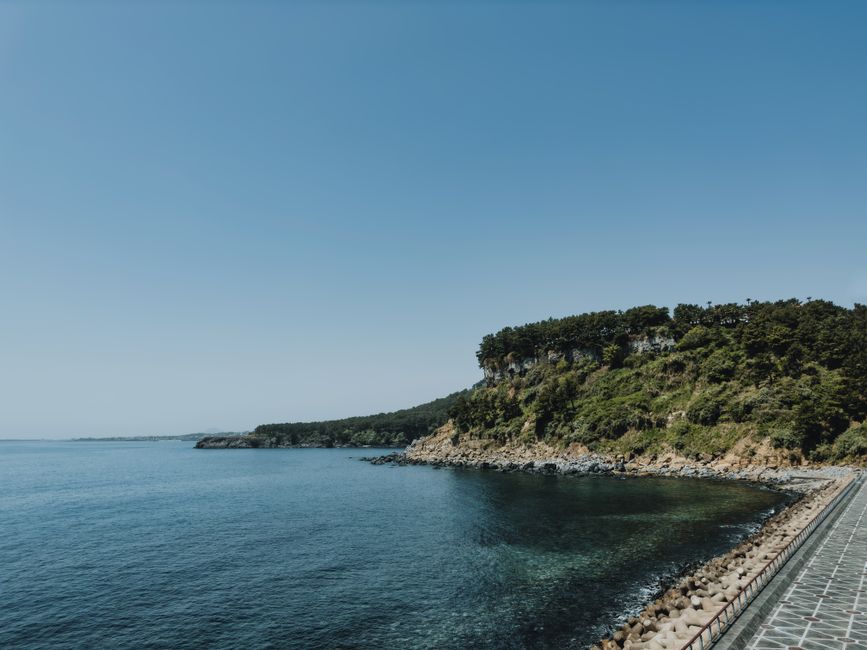
A friend of mine — American, first trip to Korea — messaged me last month with what he thought was a clever plan: skip the Seoul layover entirely, fly straight into Jeju, decompress on the beach for a few days, then hop over to Seoul afterward. Efficient, right? He almost got stuck. Not because Jeju is hard to enter — it's actually easier than the mainland for a lot of nationalities — but because he assumed "visa-free for Jeju" meant "visa-free for Korea." It doesn't. And once I started explaining why, I realized most of what makes Jeju confusing to visitors is also what makes it genuinely different from the rest of the country, not just a scenic add-on to a Seoul trip.
🛂 Wait, Jeju Has a Different Visa Rule Than the Rest of Korea?
Yes, and it trips people up constantly. Citizens of roughly 100+ countries — including the US, UK, Canada, Australia, and most of the EU — can fly directly into Jeju International Airport (or arrive by sea) without a visa or K-ETA, for up to 30 days, tourism only. No work, no study, and you need a return ticket and proof of accommodation.
The catch: that waiver only covers Jeju itself. It does not let you continue on to Seoul or anywhere else on the mainland. If you fly into Jeju first and then want to hop to Seoul, you need to separately qualify for Korea's national entry rules (K-ETA or a visa, depending on your passport and how long the current exemptions run) — the same way you would if Jeju weren't in the picture at all.
💡 Pro tip: If your trip includes both Seoul and Jeju, it's almost always simpler to fly into Incheon or Gimpo first, since most Western passport holders are already covered there under Korea's broader entry policy, then take a short domestic flight down to Jeju. Flying to Jeju first only makes sense if you're staying on the island the whole time, or you've already sorted your mainland entry requirements independently.
Also worth knowing: the Jeju waiver doesn't apply to everyone — nationals of a handful of countries (including China and India, with some exceptions for organized group tours) still need a visa even for Jeju-only trips, alongside travelers from a short list of countries excluded for security reasons.
🗣️ The Language Doesn't Even Sound Like Korean
Here's the part that surprises people more than the visa rule: Jeju has its own dialect, 제주어 (Jeju-eo), and it's different enough that mainland Koreans genuinely struggle to follow a conversation between two older Jeju residents speaking it naturally. It kept forms of Korean that disappeared from the mainland centuries ago, shaped by the island's long isolation across the strait.
It's fading fast — most younger Jeju locals grow up speaking standard Korean and only pick up bits of Jeju-eo from grandparents, which is part of why linguists classify it as critically endangered. If you ever hear an older haenyeo diver or a market vendor speaking rapid-fire Jeju-eo to a friend, that's not a regional accent. It's closer to a separate language that happens to share an alphabet.
🌊 The Sea Women Are a Culture, Not a Photo-Op
The 해녀 (haenyeo) — free-diving women who harvest abalone, sea urchin, and seaweed by hand, without oxygen tanks, some well into their 70s and 80s — are Jeju's most famous cultural export, and UNESCO added the tradition to its Intangible Cultural Heritage list in 2016. What doesn't always make it into the tourist version: haenyeo built a genuinely matriarchal economic structure on the island, where women were historically the primary income earners for generations, which is not how the rest of Korean society worked. Their numbers have dropped sharply as the work is grueling and the younger generation isn't taking it up, so what you're watching if you catch a haenyeo show or visit a diving village is a living tradition that's visibly running out of time, not a recreated performance.
🐷 Even the Pork Tastes Like a Different Island
Jeju's 흑돼지 (heuk-dwaeji, "black pork") comes from a native island breed that adapted to Jeju's specific climate and volcanic soil over a long isolation period, and locals are genuinely particular about the difference between real Jeju black pork and mainland pork served under the same name. It's usually grilled thick-cut at the table, often with a rougher, more textured skin than what you'd get in a Seoul samgyeopsal spot, and it's treated less like "Korean BBQ" and more like a specific regional specialty you're expected to travel for.
📈 Why Everyone's Suddenly Talking About Jeju
This isn't just a nostalgia pitch from a resident — the numbers back up that Jeju is having a real moment. From January through May 2026, the island logged 955,748 foreign visitors, up 21.5% year-on-year. Mainland China remained the biggest source market by far (613,112 visitors, still growing but only up 3.9%), while the real story is everywhere else: Taiwan arrivals jumped 102.2% and Japan arrivals jumped 99.3% over the same period, roughly doubling both markets in under half a year.
⚠ Note: None of these visa or entry details are legal advice — requirements shift, especially around which countries get temporary K-ETA exemptions, so check Korea's official immigration guidance close to your travel dates rather than relying on any single blog post, mine included.
Seoul gets you K-pop, palaces, and convenience store snacks at 2am. Jeju gets you a different language, a matriarchal diving tradition older than the country's current borders, and pork that locals will argue about with a straight face. Different entry rules turn out to be a pretty accurate metaphor for the place.
For more on stepping outside the capital, check out our guide to the Korea tourists don't usually see, and if you're sorting out entry requirements before you go, our breakdown of whether you still need a K-ETA in 2026 is a good place to start.
Photo by Kharl Anthony Paica on Pexels.

Comments
Post a Comment