🇰🇷 I Tried to Tip a Waiter in Korea Once. He Chased Me Down the Street. (2026)
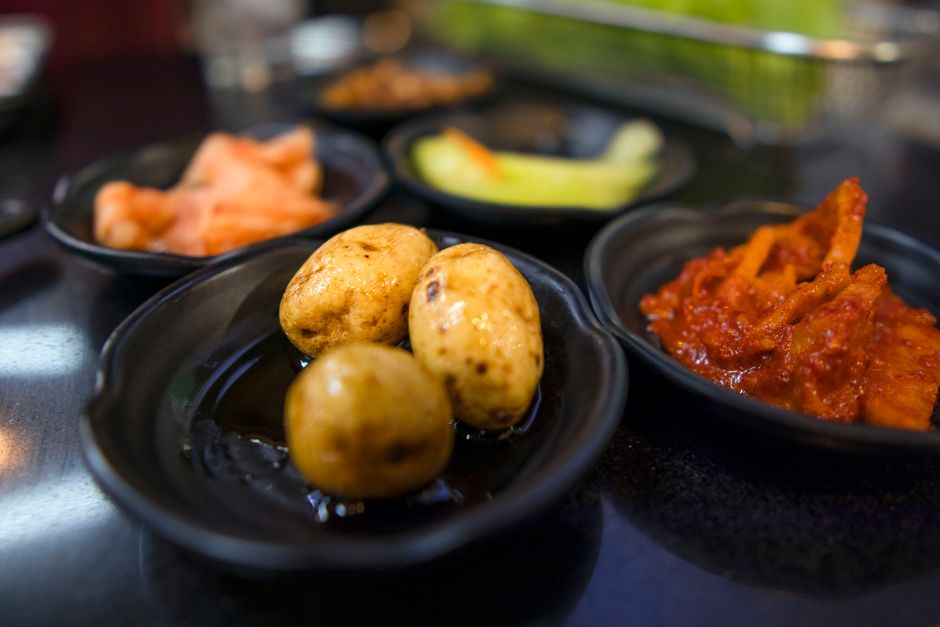
A friend visiting from out of town insisted on leaving cash on the table after a barbecue dinner near my place — "just to be polite," they said. We were two blocks away, still full and arguing about dessert, when a server jogged up behind us holding out a folded ₩10,000 bill like it was something we'd dropped by accident. That's the first time I really understood how differently tipping lands here.
If you're planning a trip and searching "do you tip in Korea," you've probably already found ten guides that say some version of "no, tipping isn't customary." That part is true, but it's also the least useful part. The more useful part is what actually happens when you try anyway, where the confusion tends to hit hardest, and the one line on your receipt that can make you think you owe more than you do.
💸 Why the "No Tipping" Rule Actually Holds Up
In a lot of countries, a server's base pay assumes tips will fill the gap. That's not how it works here — wages for restaurant, bar, and hotel staff are set without a tipping buffer built in, so a tip doesn't top up someone's income the way it might elsewhere. It reads less like generosity and more like a small accounting error, which is exactly why staff so often try to hand it back.
This holds true from street-side pojangmacha stalls all the way up to fairly nice restaurants. I've never once seen a Korean friend leave coins or a bill on a table "for the service," and after a few years here, I've stopped instinctively reaching for my wallet too.
🧾 The Line on Your Receipt That Isn't a Tip
Here's where it actually gets confusing, and where I've watched more than one visiting friend do mental math they didn't need to do: some upscale restaurants, hotel restaurants, and buffet-style dining rooms add an automatic service charge (봉사료) of around 10% to the bill, on top of the 10% VAT that's already baked into most listed prices in Korea.
💰 Say dinner comes to ₩40,000 (~$29.40) before any service charge. A 10% 봉사료 adds another ₩4,000 (~$2.94) automatically — no extra cash needed, no separate tip line to fill in. If you see that charge already itemized, nothing more is expected, and adding cash on top of it is doubly confusing for staff.
⚠ Note: This charge only shows up at a fairly narrow slice of places — high-end hotel dining, some buffets, private dining rooms. Your neighborhood galbi place or a bowl of kalguksu almost certainly won't have it, so don't assume it's hiding somewhere on every bill.
🚕 Taxis, Delivery Apps, and Everywhere Else You'd Normally Tip
Taxis: almost everyone here pays by card through the meter or through Kakao T, and rounding up or leaving change isn't a thing drivers expect. If you're paying cash and want to keep it simple, exact change is genuinely fine.
Food delivery apps like Baemin or Coupang Eats don't have a tipping field built into checkout — the delivery fee you pay is the whole transaction, and there's no "add a little extra for the rider" button to look for. Hotels are similar: standard hotels don't expect anything for housekeeping or bags, though I've heard of guests at five-star properties occasionally leaving a small amount for a bellhop. It's not the norm even there.
🙅 When Offering a Tip Can Actually Feel Awkward
The instinct to tip usually comes from a good place, which is exactly why it can land oddly here. Handing cash to someone — especially someone older or more senior — can come across less like a thank-you and more like you're treating a professional the way you'd treat someone you're paying off the books. It's not that anyone assumes bad intent; it's more that the gesture itself doesn't have the same "generous" meaning it does elsewhere, so it can read as a mild misunderstanding rather than kindness.
🎁 Fun fact: if someone here does want to slip money to a person in a service role — say, a wedding hall usher or someone who went well out of their way — the polite version usually isn't a bill pressed into a hand. It's a small envelope, offered quietly, with both hands. The wrapping is doing a lot of the work of signaling "this is intentional," not "here's my leftover change."
🧭 The One Place Tipping Is Actually Expected
Private tour guides working with international visitors are the clear exception. For a half-day or full-day tour, a tip in the range of ₩20,000–₩30,000 (~$14.71–$22.06) is commonly appreciated and not seen as strange, especially since a lot of these guides work independently rather than through a big agency. If a friend books a private guide through their hotel or an online platform, this is really the one scenario worth budgeting for.
Outside of that, hair salons, spas, and massage places all fall under the same "not expected" umbrella as restaurants — so if you've just come from getting your brows done or trying a Korean-style shave, you can relax and keep your wallet closed on the way out.
Between this and figuring out the tax refund line at the airport, Korea has a few money habits that run backward from what you'd expect — but once you've got them down, they make everyday spending here a lot simpler, not harder.
Enjoy!
Photo by Wilson Ren on Pexels.


Comments
Post a Comment